
This week in the War, 22–28 April 1940: Clare Boothe Luce

This week in the war, on 25 April 1940, American journalist and author, Clare Boothe Luce, left France for England. She had been in Europe since February and had already visited Italy and had toured the Maginot Line in France. She subsequently recounted much of what she had heard and seen on her travels in her book Europe in the Spring (Alfred A. Knopf, NY, 1941). Of her arrival in London, she writes: “There were bright azaleas in the window-boxes…, and tulips in the court of Buckingham Palace. Sheep browsed in park enclosures, ducks splashed joyously in park pools, and hordes of pink-faced people lounged happily in tuppenny deck chairs on the Hyde Park greens, feeding pigeons.”

Luce’s crisp prose notes how the entrances to buildings were guarded by sandbags that had “lost their pristine plumpness” and “sagged limply,” and how the black-out gave Londoners their first experience of star-filled nights. She remarks, most tellingly of all, “I was just beginning to suspect…France and England had been dangerously lulled to sleep by the self-induced illusion that they had both time and impregnable defences.”
Posted in Book, World War II | Tagged , , | Comments Off on This week in the War, 22–28 April 1940: Clare Boothe Luce

In the news: Romanino’s Christ


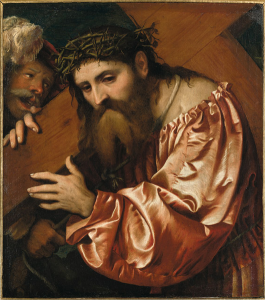
The Italian Renaissance masterpiece, Christ Carrying a Cross Dragged by a Rogue, painted by Girolamo Romanino, was seized by US officials while on tour in Tallahassee and, as reported in the British newspaper The Telegraph (19 April 2012), returned to the descendants of the earlier owner, Federico Gentili di Giuseppe, an Italian of Jewish descent, who had purchased the painting at an auction in Paris in 1914.

This painting, like many others, had been seized by the Nazis during their occupation of France, 1940–1944. Both Hitler and Reichsmarschall Hermann Goering were avid collectors of stolen works of art. Much was never returned to the rightful owners.

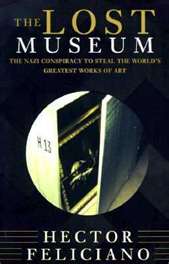
American writer Hector Feliciano provides a revealing account of the Nazis’ systematic pillaging of European art in his book The Lost Museum–The Nazi Conspiracy to Steal the World’s Greatest Works of Art (Basic Books, 1995).

Posted in Book, In the news, World War II | Tagged , , , | Comments Off on In the news: Romanino’s Christ

This week in the War, 15 April–21 April 1940: Hitler’s birthday

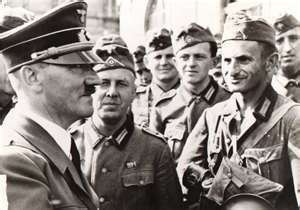
Saturday 20 April 1940 was Adolf Hitler’s fifty-first birthday. In a typically ebullient radio broadcast, Propaganda Minister Joseph Goebbels said, “The German people have found in the Fuehrer the incarnation of their strength and the most brilliant exponent of their national aims.” American journalist, William L. Shirer, quoted this passage in his Berlin Diary (1934–1941), noting that the birthday celebrations were poorly attended that year. (The fighting in Norway still continued and German casualties were mounting).

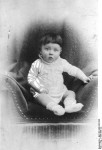
Adolf Hitler was born in 1889 in Braunau am Inn, Austria, son of Alois and Klara Hitler, and spent his formative ‘bohemian’ years in Vienna before serving in the German army during World War I. These experiences formed the basis for his monograph, Mein Kampf.

Hitler’s rise to power, both nationally and internationally, the Nuremberg rallies, the Berlin Olympics, the Phoney War, the events surrouding the Blitzkrieg, and the French surrender in the forest of Compiegne, were all observed and recorded by Shirer in his capacity as chief of Universal News Service’s Berlin office.

Shirer finally left Germany when it became clear that the Gestapo had taken an interest in his activities.

Hitler, along with his mistress, Eva Braun, would die on 30 May 1945 in the ruins of Berlin. Shirer went on to write several non-fiction books based upon his wartime experiences, most notably The Rise and Fall of the Third Reich (1960).

Posted in Book, World War II | Tagged , , | Comments Off on This week in the War, 15 April–21 April 1940: Hitler’s birthday

In the news: Resistance hero Raymond Aubrac dies at age 97


Resistance leader Raymond Aubrac died recently (10 April 2012) at the age of 97 in a French military hospital in Paris. Aubrac was predeceased by his equally famous wife, Lucie, who died in 2007 at the age of 94.

Lucie was one of the founders of the resistance group Liberation-Sud in the South of France, where she taught at a lycee in Lyon.

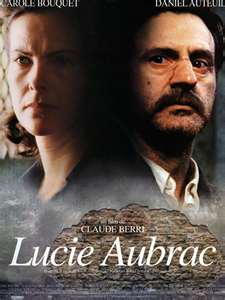
In her book Outwitting the Gestapo (University of Nebraska Press, 1993), she describes how she helped her husband escape from prison following Raymond’s capture and torture at the hands of Gestapo chief Klaus Barbie, the infamous ‘Butcher of Lyon’. The 1997 movie Lucie Aubrac describes her adventures, and starred French actress/fashion model Carole Bouquet (already well known for her role in the 1981 James Bond movie For Your Eyes Only).

Posted in In the news, Movie, World War II | Tagged , , | Comments Off on In the news: Resistance hero Raymond Aubrac dies at age 97

This week in the War, 8–14 April 1940: Denmark & Norway

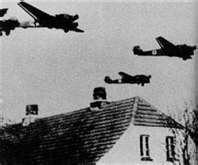
This week in the war, in the early hours of Tuesday 9 April 1940, Danish civilians were awoken by the sound of German bombers flying low over the rooftops. The Phoney War was over and the Hitler’s invasions of Denmark and Norway had begun.

With Copenhagen in enemy hands, the Danes surrendered the following day. The Norwegians fought on.

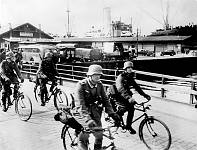
In Norway, the Germans had staged seaborne landings at Oslo, Kristiansand, Bergen, Trondheim, and also at Narvik in the north. They had sent airborne troops to seize Stavanger. Germans soldiers are shown (left) on bicycles, pedalling away from the docks in Oslo.

Norway was of strategic importance, both as a base for U-boats and German surface raiders, and as an ice-free supply route for shipments of Swedish iron-ore via the port of Narvik.

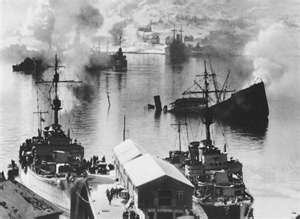
The German navy suffered heavily, losing the the heavy cruiser Blucher and light cruisers, Karlsruhe and Konigsberg.  Royal Navy Captain Warburton-Lee was awarded a posthumous Victoria Cross after leading his his destroyer flotilla into Narvik Fjord (also called Ofotfjord), where he surprised ten German destroyers, sinking two of them, along with several transports. Two of his own ships were lost in the battle.

In the Second Battle of Narvik, 13 April 1940, the veteran World-War-I British battleship, HMS Warspite, entered Narvik Fjord with a squadron of nine destroyers (including HMS Cossack of ‘Altmark‘ fame). In the subsequent action, seven German destroyers were sunk or were beached and abandoned by their crews.

The Norwegians, supported by British, French, and Polish troops, fought on but, by early May, most of southern Norway was in German hands. By early June, the last remaining units of the Allied expeditionary force were evacuated from Narvik. King Haakon and his cabinet ministers left Tromso on 7 June and sailed to Britain, where they formed the Norwegian government-in-exile.

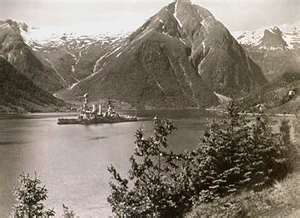
The German pre-World-War-I battleship  Schlesien (which the treaty of Versailles allowed Germany to retain) is shown left, steaming through a Norwegian fjord.

Posted in World War II | Tagged , , , , | Comments Off on This week in the War, 8–14 April 1940: Denmark & Norway

In the news: Eggstraordinary rock


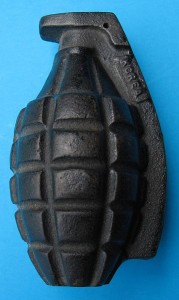
British newspaper The Mail on Sunday reported this week that on 7 April 2012 a toddler on an Easter-egg-hunt found a live grenade, similar to the one pictured above. The event took place at Holford, Somerset. Stuart Moffat and his wife Victoria were two of the parents who were supervising the 25 or so children. When a 3-year-old was noticed standing on what the lad thought was a rock, Stuart correctly identified it as neither rock nor egg, but an old-
fashioned pineapple grenade.

They were common in World War II and sometimes went by the name of ‘Mills bombs’, as they were manufactured by the Mills Munition Factory in Birmingham. The offending grenade was subsequently removed by the bomb squad and safely done away with.

Well done Stuart. I imagine your wife was ‘not amused.’

Posted in In the news, World War II | Tagged , | Comments Off on In the news: Eggstraordinary rock

This week in the War, 1–7 April 1940: Hitler has missed the bus

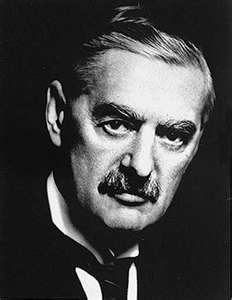
This week in the war, on Thursday 4 April, British Prime Minister Neville Chamberlain gave an optimistic speech to Conservative Party members, declaring that Hitler had ‘missed the bus.’ Following the collapse of Poland the previous year, Europe had settled into the so-called Phoney War, with little or no action from the main combatants. Hitler had abandoned his Plan Yellow, and the Soviet-Finnish war had come to an end. Germany had been better prepared at the outbreak of World War II, Chamberlain reasoned, but Hitler’s inaction had given the Allies opportunity to organize and gain strength.

A few days later, Germany launched a full scale invasion of Denmark and Norway. Within a month, Hitler’s Blitzkrieg would strike against the Low Countries and France. The reality of 1–7 April 1940 and the days that followed is succinctly (and eloquently) put by Churchill: ‘Complete immobility and silence reigned behind the German front. Suddenly the passive or small-scale policy of the Allies was swept away by a cataract of violent surprises.’ [Winston S. Churchill: The Second World War (Cassell, 1959)].

Posted in World War II | Tagged , , , , , | Comments Off on This week in the War, 1–7 April 1940: Hitler has missed the bus

This week in the War, 25–31 March 1940: Atlantis

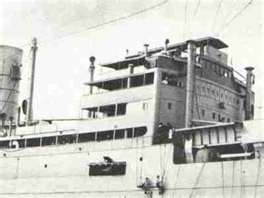
This week in the war on 31 March 1940, the German auxiliary cruiser, Atlantis, set sail from Bremen for the open waters of the Atlantic. As a commerce raider, she had a dummy funnel and a variety of tricks to change her appearance, and also the appearance of her crew, who had multiple uniforms.

The ship was equipped with hidden guns, torpedo tubes and mine-laying capabilities. After steering north across the Arctic Circle, she veered south, crossed the equator, where she switched her ‘nationality’ from Russian to Japanese (both nations being neutral at the time) and rounded the Cape of Good Hope into the Indian Ocean. Finally, she entered the Pacific.

Under the command of her captain, Bernhard Rogge, she sank or captured over 20 ships, most notably the British cargo ship Automedon, where Rogge discovered a top-secret intelligence report on the strengths and weaknesses of British defences in Singapore and the Far East. Rogge dispatched the report to his embassy in Tokyo and hence to the Japanese.

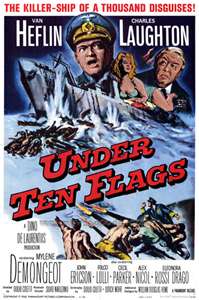
On 22 November 1941, the Atlantis was discovered and sunk by the British heavy cruiser HMS Devonshire. The story of the Atlantis is the subject of the 1960 Italian-American war movie Under Ten Flags (in Italian: Sotto Dieci Bandiere). American film actor, Van Heflin, played the role of Bernhard Rogge.


Posted in Movie, World War II | Tagged | Comments Off on This week in the War, 25–31 March 1940: Atlantis

This week in the War, 18–24 March 1940: Brenner Pass meeting

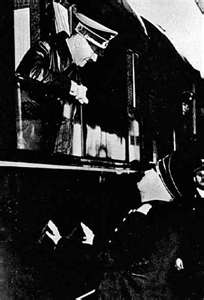
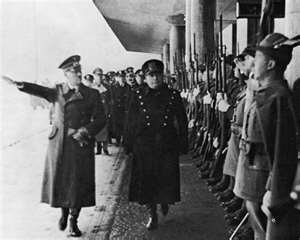
A much publicized meeting between right-wing dictators, Adolf Hitler and Benito Mussolini, took place this week in the war, on Monday 18 March. Only Franco was missing from the mix. Snow was falling in the Brenner pass as the Fuehrer’s train rolled to a halt in the town of Brennero, on the Italian side of the border with Germany. Ostensibly, discussions were to focus on a peace proposal that Hitler had drawn up and shown to American Secretary of State, Sumner Welles, when the latter had visited Berlin at the beginning of the month.

In reality, the purpose of the rendezvous was to arrange how and when Italy would join in the war against Britain and France. Hitler deliberately concealed his intention to invade Denmark and Norway, but laid out his planned invasion of France.

Mussolini promised to enter the war, once it became evident that the German offensive would prove victorious. And enter he did. On 10 June, in with France’s army in full retreat and with the evacuation of the French capital well underway, Mussolini declared war from the balcony of the Palazzo Venezia in Rome.

Posted in World War II | Tagged , , , | Comments Off on This week in the War, 18–24 March 1940: Brenner Pass meeting

This week in the War, 11–17 March 1940: The Duke & Josephine

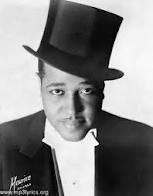
This week in the war, on 15 March 1940 in Chicago, American jazz composer and pianist, Duke Ellington, recorded Concerto for Cootie, which he dedicated to his trumpet soloist Charles ‘Cootie’ Williams. Ellington and his band were at the height of their creativity with recordings such as Jack the Bear, Cotton Tail, and Ko Ko. Many consider Concerto for Cootie to be a landmark in jazz history and one of Ellington’s greatest compositions. Trumpeter Cootie Williams left to join Benny Goodman’s orchestra, and Concerto for Cootie turned into Do Nothing Till You Hear from Me, with lyrics added by Bob Russell. The song continued to be popular and was performed by many of the greats: Louis Armstrong, Sammy Davis Jr., Ella Fitzgerald, Andy Williams.

While Ellington was recording in Chicago, another great American-born jazz artist was living and performing in France: the singer-dancer and Folies-Bergere star, Josephine Baker, was entertaining French troops stationed on the Maginot Line. During the Christmas of the ‘Phoney War’, she had taken her act to the American Hospital in Paris. Before that, when France had entered the war in early September 1939, she had been recruited by the Deuxieme Bureau (French Military Intelligence) and spied for the Allies throughout World War II. She lived at the spectacular Chateau des Milandes.

She had at least two reasons to fight the Nazis and their racist laws: she was black and her husband was Jewish. At the end of hostilities, the grateful French awarded her the Croix de Guerre.

Posted in World War II | Tagged , , , | Comments Off on This week in the War, 11–17 March 1940: The Duke & Josephine