This week in the War, 27 May–2 June 1940: The Snow Goose

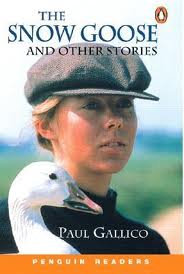
The Snow Goose, Paul Gallico’s coming-of-age novel, is set in the lonely marshlands of Essex during World War II. A young girl named Fritha finds a injured snow goose and she and a surly lighthouse keeper nurse the bird back to health.

Atonement by Ian McEwan is also a coming-of-age novel, but addresses an additional question: Could someone, even as a child (in the book, her name is Briony) commit an act so terrible that she can never be forgiven?

Both books span the period of the Dunkirk evacuation (27 May–4 June 1940), when the Royal Navy, aided by an armada of tiny craft, from yachts to fishing boats, rescued over 300,000 British and French troops and carried them to safety in England.

In Gallico’s novel, the lighthouse keeper single-handedly takes his small sailboat to Dunkirk and ferries boatload after boatload of soldiers from the beach to the larger ships that are waiting off-shore. Sadly, the lighthouse keeper perishes in the end, and his boat is lost. Throughout the evacuation, the snow goose flies overhead to guide and keep watch.

Thank you, Snow Goose, for bringing home our boys.


Posted in Book, Movie, World War II | Tagged , , , , | Comments Off on This week in the War, 27 May–2 June 1940: The Snow Goose

In the news: Transit of Venus, 5 June/6 June 2012

If you miss this event, expect to wait over a century to see it again (in December 2117). A transit of Venus happens when the planet passes between us and the sun. Although the last transit occurred in 2004, the event is usually extremely rare. Use precautions—view through welder’s glass, as you would for a solar eclipse—if you plan to observe.

Posted in In the news | Tagged | Comments Off on In the news: Transit of Venus, 5 June/6 June 2012

In the news: Memorial Day 2012

The use of dogs in warfare goes back to ancient times, even as far back as the Greeks, and the Egyptians.

During World War I, the Belgians used their Bouviers des Flandres to haul machine guns to the front. In World War II, dogs were used to warn of ambushes and to detect arms caches.


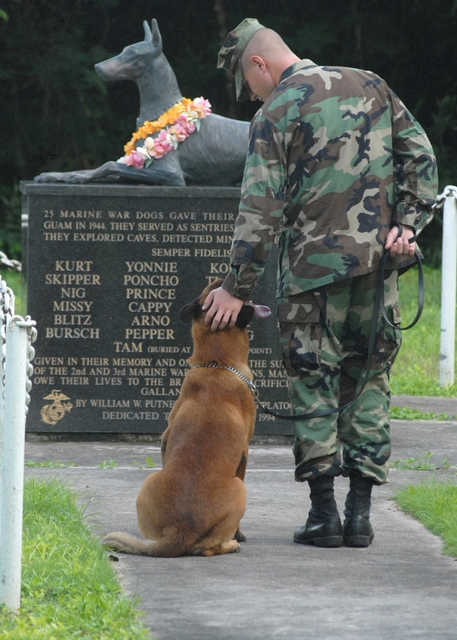
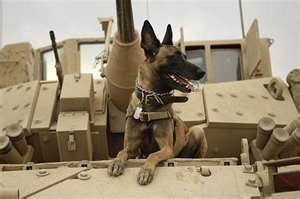
These modern day pictures of a soldier’s best friend are taken at the US National War Dog Cemetery on Guam and on the front of a Bradley fighting vehicle.

Posted in In the news, World War II | Tagged , , | Comments Off on In the news: Memorial Day 2012

In the news: Bohuslav Kimlicka–One of the Few

Bohuslav Kimlicka flew with the Czech air force, defending his country from the Nazi invasion of 1938. Afterwards, he fought with the French, attempting to stem the 1940 German Blitzkrieg , and then with the Royal Air Force. His descendants recently uncovered his wartime logbook and, according to The Telegraph newspaper, he was officially added to the list of pilots who fought in the Battle of Britain—the famous Few—some seventy-two years after the event.

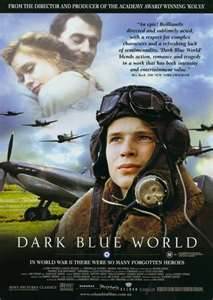
 The 2001 movie Dark Blue World tells of the Czech pilots who fought with the RAF, and of the sad fate of those who returned home to postwar Communist Czechoslovakia.

Tally-ho, Bohuslav. You were a decent chap.

Posted in Movie, World War II | Tagged , , | Comments Off on In the news: Bohuslav Kimlicka–One of the Few

This week in the War, 20–26 May 1940: Maxime Weygand–man of the hour

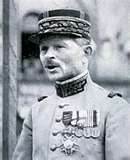
Monday 20 May 1940, General Maxime Weygand (who had been appointed French commander-in-chief the previous day)  met with General Gamelin, whom he was replacing, and with a government which was already beginning to panic. The seventy-three-year-old Weygand had (like de Gaulle) long been an advocate for military preparedness and mobile armour. He recognized the need for immediate action to counter the German advance and, at 7.00am 21 May, he flew from Le Bourget on a tour of the front, intending to meet his key generals—including Lord John Gort, commander of the British Expeditionary Force (BEF) and the Belgian King Leopold III .

The king posed objections to the latest French plans, General Billotte who commanded France’s First Army was fatally injured in an automobile accident soon after meeting with Weygand, and the meeting with Gort never took place. The speed of the German advance and the overwhelming superiority of the Luftwaffe forced Weygand to cross the English Channel to Dover and return to Paris by way of Cherbourg.

Weygand’s enthusiasm for mounting a counteroffensive impressed Winston Churchill, when he met with the general at the fort of Vincennes on the edge of Paris on 22 May. Churchill describes Weygand as, “brisk, buoyant, and incisive.” Alas, too many Allied tanks and planes had already been lost.

On 26 May, with the situation worsening by the hour, Lord Gort drew up plans for the BEF to retreat to the coast with a view to evacuation.


Posted in Book, World War II | Tagged , , | Comments Off on This week in the War, 20–26 May 1940: Maxime Weygand–man of the hour

This week in the War, 13–19 May 1940: German breakthrough at Sedan

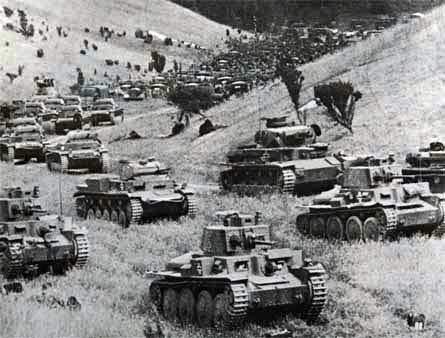
This week in the war, with their invasion of the Low Countries well under way, German forces attacked the town of Sedan in the Ardennes region of France. Responsibility for the attack fell to Panzer Group Kleist (named for its commander, former cavalryman, General Ewald von Kleist).

The idea of attacking with armoured forces through the near impenetrable forests and hills of the Ardennes was the brainchild of Army Group A chief-of-staff Erich von Manstein and Heinz Guderian (who would command Panzer Group Kleist‘s XIX Corps), and had received the blessing of Hitler following von Manstein’s meeting with the Fuehrer at a ‘get-together’ breakfast earlier in the year.

Panzer Group Kleist had 1,000 planes at its disposal and, at 7am on 13 May 1940, they attacked French positions in and around Sedan. By 4.00pm that evening, von Kleist’s panzer divisions were jamming the narrow mountain roads as they crossed from Belgium into France. The Allied air forces were concentrated to the north, where it was assumed that the Germans posed a greater threat, and so missed a golden opportunity to strike.

By 15 May, the French XXI Corps was counter-attacking with tanks, intent on blocking any attempt by the enemy to move south and outflank the Maginot Line, but the attacks were to prove irrelevant. The tanks and motorized infantry of Guderian’s XIX Corps were already speeding westward, heading deeper into the heart of France.


Posted in World War II | Tagged , , , , , | Comments Off on This week in the War, 13–19 May 1940: German breakthrough at Sedan

In the news: 15 May, Nylon Stockings Day!

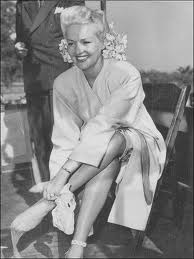
15 May is Nylon Stockings Day! Seventy-two years ago, the famous DuPont product went on sale for the first time ever in US stores. Look at WWII pinup Betty Grable putting her nylons through their paces in this 1940s photo.


Posted in In the news, World War II | Tagged | Comments Off on In the news: 15 May, Nylon Stockings Day!

In the news: Kittyhawk’s Sahara crash site found after 70 years

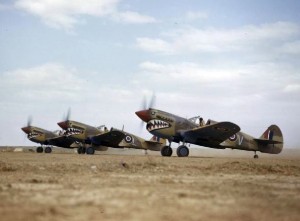
Seventy years after Rommel’s Afrika Korps and Monty’s Eighth Army were battling for control of North Africa, an RAF fighter plane belonging to Britain’s Desert Air Force was found in the Sahara Desert. According to the British newspaper The Telegraph (10 May 2012), the plane was an American-built Kittyhawk P-40 which had crashed in a remote region of the Sahara in June 1942. The wreckage of the downed fighter plane was recently discovered by a Polish oil company. There was no evidence of the pilot, and it is presumed he set out on foot and perished in the desert.

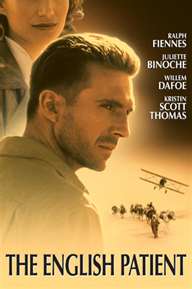
Perilous flights across sandy wastes have inspired novelists and movie producers alike, from Elleston Trevor’s 1964 novel The Flight of the Phoenix to Michael Ondaatje’s 1992 novel The English Patient. For the latter, Ondaatje received the Canadian Governor General’s Award and also the Booker Prize for Fiction. In 1997, the film version of The English Patient won nine Academy Awards, including Best Picture.


Posted in Book, In the news, Movie, World War II | Tagged , , , | 1 Comment

This week in the War, 6–12 May 1940: “Wake up! The Germans are coming…!”

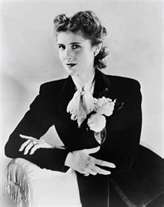
On the morning of 10 May 1940, American journalist Claire Boothe Luce was asleep in her room on the top floor of the US embassy in Brussels when a maid shook her by the shoulder, urging her to wake up because the Germans were coming. Hitler’s invasion of Belgium, the Netherlands and France was underway.

From her window, Luce could see twenty or so planes flying in formation, high above the city. In her book Europe in the Spring (Alfred A. Knopf, NY, 1941), she describes hearing the whistles of falling bombs, and the explosions that followed. Following the all-clear, she ate breakfast at a sidewalk cafe on Place Rogier. The Germans had already passed through the Duchy of Luxembourg ‘like a cheese-knife,’ she was told, but French cavalry had arrived in Brussels to help the Belgians. She was also informed that British Prime Minister, Neville Chamberlain, was struggling to defend himself in the House of Commons. He was blamed for the fiasco in Norway, where the British expeditionary force had suffered a series of reverses leading to its eventual withdrawal.
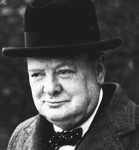
Across the Atlantic, US President, Franklin Delano Roosevelt, held a meeting in the Cabinet Room of the White House. It was 10.30am (Washington time), and his principal advisors and military chiefs were there to discuss the developing crisis in Europe. Secretary of Commerce, Harry Hopkins, was presenting a worrisome account of the shortage of strategic raw materials when news arrived from London that Chamberlain had resigned as Prime Minister and been replaced by Winston Churchill. Roosevelt told his Cabinet that Churchill was the best man that England had.

“In modern times,” Roosevelt warned Americans later that evening, in a speech at Constitution Hall, “it is a shorter distance from Europe to San Francisco, California, than it was for the ships and legions of Julius Caesar to move from Rome to Spain or Rome to Britain.”
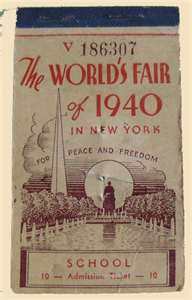
The following day, 11 May 1940, the New York World’s Fair—which had been closed over the winter—reopened with great ceremony. Technology and progress were an overriding theme and crowds flocked to view the wonders that the future held in store. In the Westinghouse pavillion, they could witness the sterilizing effect of flashes of light on water droplets—a demonstration that was named, ironically, the Microblitzkrieg.

Posted in Book, World War II | Tagged , , , , , | Comments Off on This week in the War, 6–12 May 1940: “Wake up! The Germans are coming…!”

This week in the War, 29 April–5 May 1940: Let the games NOT begin

This week in the war, on 1 May 1940, the Olympic Games that were originally scheduled to be held that fall in Tokyo were officially cancelled by the International Olympic Committee. They would not resume until 1948.
In stalag XIII-A, a group of prisoners kept the flame alight by staging an unofficial International Prisoner-of-War Olympic Games in August 1940. An Olympic flag was made from a prisoner’s shirt, and the nations represented included Belgium, France, Great Britain, Norway, Poland, and the Netherlands. In 1979, Polish movie director Andrzej Kotkowski made Olimpiada 40. A scene from this movie is shown above on the right.

Posted in Movie, World War II | Tagged , | Comments Off on This week in the War, 29 April–5 May 1940: Let the games NOT begin