In the news: Former Fusilier unearths bomb in garden

Former Royal Fusilier, Arthur Amphlett, got more than a spadeful of trouble when, according to the Coventry Telegraph (12 March 2012), he unearthed the tail end of a WW II German bomb in his vegetable patch. Friend Jenny Keen wanted to polish it up and keep it to impress the neighbours. Finders keepers, in my opinion, Jenny. I can’t see the Germans wanting it back.

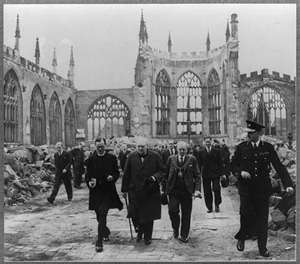
Mr. Amphlett lives in Canley, on the outskirts of Coventry, England. Sad to say, but Coventry had a bad time of it in WW II, particularly on the night of 14 November 1940. The air raid by the Luftwaffe left over 500 dead and destroyed most of the medieval cathedral. The iconic photo of Churchill inspecting the ruins is shown off to the side.

Posted in In the news, World War II | Tagged , , | Comments Off on In the news: Former Fusilier unearths bomb in garden

This week in the War, 4–10 March 1940: The Deuxieme Bureau & The Heroes of Telemark

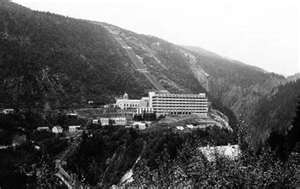
This week in the war, on 9 March 1940 and with the agreement of Norwegian authorities, a team of Deuxieme Bureau (French Military Intelligence) operatives took possession of a stock of heavy water at the Vemork Norsk Hydo plant (shown here) near the village of Rjukan in the Norwegian county of Telemark. Heavy water (D2O) can be used to fuel an atomic pile, such as the one that the Nazis were intending to build in the Black Forest. Such piles can produce the fissionable material required for an atom bomb. The French shipped the heavy water across the North Sea to Scotland and then to France. In June, when France was about to succumb to the German Blitzkrieg, the material was  shipped back to Britain.

Production at Vemork continued, even after the German occupation of Norway in April 1940, and the Allies carried out a series of operations aimed at sabotaging or destroying the plant. Their most spectacular failure was Operation Freshman in November 1942. British commandos were dispatched to Norway in gliders. Both gliders crashed and all aboard were either killed or else captured and handed over to the Gestapo for execution. Unfortunately, one month before, Hitler had issued his infamous Commando Order, requiring all commandos, and units made up of agents or saboteurs, to be killed upon capture—regardless of whether they were in uniform or had surrendered. (British commandos had been experiencing too much success!).
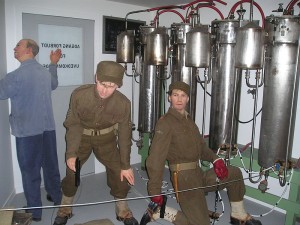
In February 1943, a second operation was mounted by Norwegian commandos who were flown from Britain in an RAF Halifax and landed by parachute. This operation, code-named Gunnerside, was stunningly successful. The team entered the factory by a basement window and planted explosives which destroyed the plant’s crucial electrolysis chamber. When the plant eventually resumed production, the Allies responded with air raids, including daylight raids by the United Stated Army Air Force.

Eventually, the Allied bombing raids convinced the German authorities to close down the plant and ship what heavy water had been produced to Germany. However, the barrels of heavy water went to the bottom of Lake Tinnsjo when the ferry was sunk by the Norwegian Resistance. Sixty years later, some of the barrels were recovered. One is currently on display at the American National World War II Museum in New Orleans. Operation Gunnerside and the sinking of the Norwegian ferry became the basis for the 1965 Hollywood movie The Heroes of Telemark, starring Kirk Douglas and Richard Harris. A more recent World War II movie that touches on heavy water, and a film that is one of my personal favourites, is Bon Voyage, directed by Jean-Paul Rappeneau. Camille (played by Virginie Ledoyen) is a physics student during the final days of the fall of France. She and her professor follow the government exodus to Bordeaux and must ensure that France’s heavy water, which they are transporting in their car, is flown to England. The movie is an entertaining mix of romance, comedy, and espionage, and includes a brief glimpse of a general who is obviously meant to be Charles de Gaulle.

Posted in Movie, World War II | Tagged , , , | Comments Off on This week in the War, 4–10 March 1940: The Deuxieme Bureau & The Heroes of Telemark

This week in the War, 26 Feb–3 March 1940: Sumner Welles

On 1 March 1940, United States Secretary of State, Sumner Welles, arrived in Berlin. This was his first visit to one of the belligerent nations. He had just visited Mussolini in (neutral) Italy and would be going on to London and Paris. His instructions from President Roosevelt were to seek a basis for peace and to offer the United States’ services as mediator. Unfortunately, World War II was not about to end that easily. Although Britain lacked the financial and industrial resources to sustain a long war, the Royal Navy ruled the seas. France likewise lacked resources, but had the largest army in Europe. Neither country was likely to agree to a settlement unless Germany relinquished her gains. Germany had a solid industrial base (plus iron ore from Sweden), an efficient army that had proved itself in Poland, and the world’s largest airforce. Hitler was in no mood to give up the conquered territory in Poland, or Czechoslovakia, or anywhere else.

Welles was fluent in German and needed no interpreter when talking with Hitler, whom Welles found to be ‘dignified.’ Churchill, he remarked, was overly loquacious and overly indulgent in alcohol. The goings-on around this period are described in an engaging and entertaining manner by Norman Moss in his book Nineteen Weeks—America, Britain, and the Fateful Summer of 1940 (Houghton Mifflin, 2003). By September 1940, Welles had resigned in the aftermath of a sex scandal involving Welles and two Pullman car porters on a train from Alabama to Washington.

The present-day structure of the United Nations owes much to the early influence of Sumner Welles.

Posted in World War II | Tagged , | Comments Off on This week in the War, 26 Feb–3 March 1940: Sumner Welles

This week in the War, 19–25 February 1940: Arbeit macht frei

On Wednesday 21 February 1940, with the concurrence of SS-Reichsfuehrer Heinrich Himmler, work began to convert a former army barracks in the small Polish town of Oswiecim—or, to use its German name: Auschwitz—into a concentration camp. The famous ‘Arbeit macht frei’ (‘Work will make you free’) sign over the main gate dates from the site’s early history as a labour camp for captured Polish resistance fighters. Rudolf Hoess was the first commandant and Josef Kramer (who was later commandant of Belsen and nicknamed ‘the Beast’) was Hoess’s second-in-command. Hoess spent much of his adult life as either a prisoner—in 1923 he received a lengthy prison sentence for murder—or as a jailer, since, after his release through a general amnesty, he joined the SS and served at Dachau and Sachsenhausen concentration camps before moving to Auschwitz.

As commandant of Auschwitz, Hoess had the opportunity to develop his murderous talents to a level unheard of in modern times. At the Nuremberg trials, he confessed to establishing large-scale extermination facilities  at Auschwitz and signed an affidavit in which he estimated a death toll of 3,000,000, mostly due to gassing. The author and journalist, William L. Shirer, provides a chilling account in his book The Rise and Fall of the Third Reich (Pan, 1964). Hoess finally stood trial in Poland and was hanged at Auschwitz in April 1947.

Posted in World War II | Tagged , , , | Comments Off on This week in the War, 19–25 February 1940: Arbeit macht frei

This week in the War, 12–18 February 1940: The Navy’s Here

The Navy’s Here was a popular song written early in the war by British songwriters, Ross Parker and Hugh Charles. They wrote it to commemorate the so-called Altmark Incident which took place in Jossingfjord, Norway, on the night of 16 February 1940. The war at sea had been going badly for Britain, with the sinking of the battleship Royal Oak and the aircraft carrier Courageous, and heavy shipping losses caused by mines and U-boats. To make matters worse, the German pocket battleship Graf Spee (scuttled on 17 November 1939) had caused further losses to Britain’s merchant fleet. The Graf Spee had passed its prisoners—all British merchant marine officers taken from ships about to be sunk—to the German supply ship, Altmark. Almost three hundred such prisoners were incarcerated aboard the Altmark as she steamed back towards Germany. After successfully dodging the Royal Navy, she was finally tracked down and forced to take refuge in Jossingfjord in neutral Norway. The British government demanded that the Norwegians free the Altmark prisoners, in accordance with international law. The Norwegians, fearful of jeopardizing Norwegian-German relations, refused to acknowledge that the prisoners even existed. Winston Churchill, then First Lord of the Admiralty, made the decision to violate the neutrality of Norwegian waters by sending the destroyer, HMS Cossack, into Jossingfjord. Officers and crew of the Cossack, some carrying cutlasses, boarded the Altmark and a sharp hand-to-hand fight ensued. [See Chapter 20 of The Second World War, Abridged one-volume edition, by Winston S. Churchill (Cassell, London, 1959)]. After suffering some casualties, the Germans were overpowered and the Cossack‘s boarding party opened the hatches to search below decks. The joyful cry “The Navy’s Here!” came from prisoners who had spent weeks locked below under terrible conditions.

The Altmark Incident, with the rescue of the prisoners and their triumphant return to Britain on board the Cossack provided the British with a reason for celebration and a much needed boost in morale. The incident convinced Hitler that he needed to accelerate his plans to invade Norway.

Posted in World War II | Tagged , , | Comments Off on This week in the War, 12–18 February 1940: The Navy’s Here

This week in the War, 5–11 February 1940: Pinocchio

On 7 February 1940, the Walt Disney animated movie Pinocchio opened in theatres across the United States. The film is named for its wooden puppet hero who is promised by a fairy that he can become a real boy if, among other things, he can prove himself truthful. How lying causes his wooden nose to grow longer and longer is one of the memorable parts of the story. The saying Truth is the first casualty of war was well known at the time and perhaps not far from the minds of Americans, despite their country’s being still at peace. Isolationist senator Hiram Warren Johnson is reputed to have used the expression during World War I. He died near the end of World War II–ironically on 6 August 1945, the day that the USA dropped an atomic bomb on Hiroshima. In fact, the origin of the quote is more ancient and is usually attributed to the Greek dramatist Aeschylus (525 BC–456 BC). Using a ruse de guerre to conceal the truth was appreciated by no one more than Winston Churchill. At the Teheran conference in November 1943, he famously remarked, “In war-time, truth is so precious that she should always be attended by a bodyguard of lies.”

Churchill’s comment inspired the title of a book by Anthony Cave Brown describing the deception and misinformation campaign undertaken by the Allies to safeguard the secrets of the D-Day invasion. See Anthony Cave Brown: Bodyguard of Lies (Quill/William Morrow, NY, 1975).

Posted in Movie, World War II | Tagged , | Comments Off on This week in the War, 5–11 February 1940: Pinocchio

This week in the War, 29 Jan–4 Feb 1940: Soviet-Finnish war

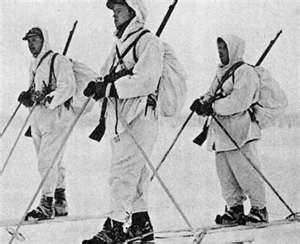
On 30 January 1940, Hitler made a bellicose speech at the Berlin Sportpalast declaring that the first phase of the war was over with the conquest of Poland. At this time, much of the fighting was outside of the ‘official’ Second World War and was taking place on the Soviet-Finnish front. The Soviet-Finnish war began with the Russian invasion of Finland on 30 November 1939. It resulted in the Soviet Union’s expulsion from the League of Nations on 14 December 1939, and continued until a peace treaty was signed on 12 March 1940. Before succumbing to overwhelming odds, the Finns achieved some spectacular successes, including their victory at the Battle of Suomussalmi, during which the Russian 44th Assault Division was annihilated. The week of 29 January–4 February 1940 saw yet another large scale Russian attack, with the Finns yet again holding their position. Towards the end of the week, the British and French were close to making the decision to send an expeditionary force to aid the Finns, albeit at the cost of ignoring Norwegian neutrality.

It is interesting to speculate what the effect would have been on the early development of the Second World War in western Europe if two of the principal belligerants, Britain and France, had risked opening an entirely new campaign with a different enemy, namely Russia. In the end, Britain and France abandoned their plan. The Soviet-Finnish war cost Finland 25,000 dead, and Russia 200,000.

Posted in World War II | Tagged | Comments Off on This week in the War, 29 Jan–4 Feb 1940: Soviet-Finnish war

This week in the War, 22–28 January 1940: De Gaulle’s memo

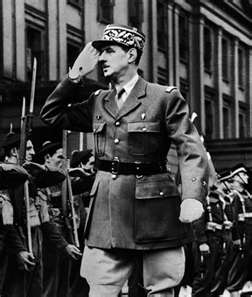
With France supposedly secure behind its Maginot Line, most French people believed there was cause for optimism. Having the largest army in Europe, they reasoned that their country would surely prevail. This view was not shared by a certain French colonel, named Charles de Gaulle. On 26 January 1940, he issued a memorandum advocating that France establish a corps de reserve mecanique, namely a mobile [armoured] reserve, before it was too late. The idea was not new. The Soviet general, Mikhail Tukhachevsky, had advocated large scale motorized units in the 1930s—and been executed when his philosophy fell into disfavour.

Most famously, the German general, Heinz Guderian, advocated exactly this kind of mobile armoured warfare and coupled it with airpower. He is considered by many to be father of the so-called Blitzkrieg, the tactics that the German army had used so successfully against Poland in 1939 and were to use against the Low Countries and France in May and June, 1940. Guderian explained much of this in his book ‘Achtung–Panzer!‘ (1937). As with many ‘new’ ideas, Blitzkrieg has roots that stretch back to earlier times. Both the British and the Germans attempted to apply such tactics during World War I, but the necessary technology—sufficiently modern vehicles and sufficiently modern planes—was absent. One might also mention the contraversial British strategist, Sir Basil Liddell Hart. Many of the post-war generation credited Liddell Hart with the basic ideas of Blitzkrieg and he was even acknowledged by Guderian in the English edition of that German general’s memoirs. But perceptions change with time, and likewise the allocation of credit. Recent historians have recognized that the truth is more complicated.

Whatever the origins of Blitzkrieg, it is a fact that de Gaulle alerted his country to the danger in his memorandum of 26 January 1940. France had the tanks (better ones than Germany) and the warplanes (more of them than Germany).  If de Gaulle’s warning had been heeded, and the French had created large-scale mobile armoured units—the equivalent of the German panzer divisions—with air support, perhaps France would not have fallen in June 1940.

Posted in World War II | Tagged | Comments Off on This week in the War, 22–28 January 1940: De Gaulle’s memo

This week in the War, 15–21 January 1940: Hitler’s intentions

Poland had fallen and battle was well underway on the Finnish-Soviet front, but, as far as the British and French were concerned, this was the period of ‘phoney war’ or ‘drole de Guerre.’ A huge French army had manned the forts of the Maginot Line throughout winter, but had no plan to attack. But Hitler had a plan. He intended to launch his forces westwards on 17 January 1940, following his so-called ‘Plan Yellow.’ However, the previous week, a German light aircraft had made a forced landing at Malines, in Belgium, and the details the plan were captured by the Belgians and shared with the French and British. On 16 January, Hitler postponed his attack until the spring, not only because Plan Yellow had been compromised but also because his generals felt it was too predictable. They thought a better and less obvious strategy would be to send their main attacking force through the forests of the Ardennes.

If the German plane had not landed at Malines, would Hitler have launched Plan Yellow in January, and would he have been stopped–as the German assault in World War I had been halted at the Marne? Would France not have fallen in June 1940? Perhaps the German generals would have gotten rid of Hitler that summer, as they had been planning, and the war would have come to an end.

Posted in World War II | Tagged , , | Comments Off on This week in the War, 15–21 January 1940: Hitler’s intentions